How L'Oréal Tested AI Product Photography
62%
Time Saved
90%
Faster
65%
Less Time

The challenge
L’Oréal partnered with Pencil and The Brandtech Group to explore how AI could enhance their creative production process across three divisions: Luxe, PPD (Professional Products Division), and CPD (Consumer Products Division), with the brands IT Cosmetics, Redken, and L’Oréal Paris. The goal was twofold: to leverage AI for efficiency through automation and templating and to explore AI's potential in creative origination, determining whether AI-generated visuals could match the quality of traditional photoshoots.
L’Oréal wanted to assess whether AI could replace a percentage of product photoshoots while maintaining high creative standards. Specifically, they wanted to focus on different types of product shots and the potential efficiencies gained by transitioning from traditional methods to AI-led image generation.
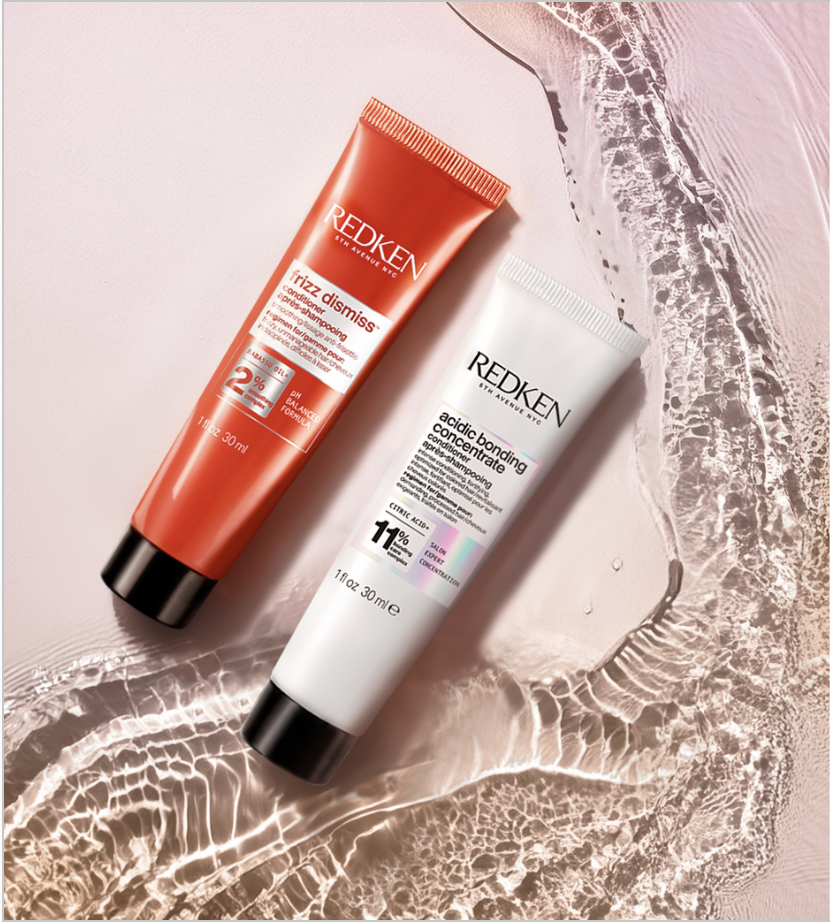
For Redken, we used in-camera product images as references to generate similar visuals in Pencil. This included dynamic imagery like Redken products splashing underwater, bottles being held up against the sky as a background, and Redken bottles wrapped in pink ribbons set against pink backdrops (originally created using CGI).
Our approach started with an ideation phase, generating a variety of AI images using stand-in products. We then refined these with expert prompting, incorporated Redken products, and completed post-production enhancements. In the beauty industry, AI isn’t a one-click solution - it requires craft, expert prompting, and retouching to achieve high-quality results. Finally, we integrated the assets into a template and scaled them across all aspect ratios.
For the Luxe division, AI was used primarily for templating, including resizing and adaptation, significantly streamlining the process. While for L’Oréal Paris, we explored product shots as well as AI’s ability to capture textures and colours, from glossy lips to matte and satin shades of lipstick.
The results
The full AI-driven process - from prompt creation and ideation with stand-in products, to final image generation and post-production - took approximately 33 hours (four days). Traditional methods, including photoshoots, typically took the L’Oréal team 13 business days.